An Open Love Letter to My Sister

Dear Caity Did,

Papa always used to say, “Skaty Caity is a heck of a lady; She won’t say yes, but she might say maybe!” It made us laugh so much even though, honestly, It didn’t really make much sense. 

He’s been gone for a decade now, but his faith in us still follows us around this town. Today, you posted to Facebook that it’s been 3 years since you poisoned yourself with meth. 

Poisoned yourself. 

That’s how you worded it. 

My heart swelled with pride when I read it, doom scrolling Facebook on my break. Pride, because you’re clean. For years, for decades, I have said that I have to continue to believe in you, to pray for you,  and to hope for you even while preparing for the worst case scenario. 

That’s the thing with drugs. There’s really no way to know how the story is going to end. It’s the most helpless feeling, to have loved someone since they were in diapers and then watch a substance that they thought was helping them destroy them. 

You were so little- we were so little- when we were first introduced to drugs. People who have not lived the life that we did will never understand how normal drugs were in our day-to-day life. I have been in social work for about a decade now, and in one of my jobs, I was jokingly referred to as “the meth sniffer.” I could tell when there was meth in a home before even setting foot on the property. It’s like when someone who is autistic can just spot the autism in another person when nobody else in their life ever clocked it. That’s how I’ve always been with drugs. I can spot it from a mile away, because it has always been a part of my life. 

The thing is, I never got pulled in. I didn’t even try weed until I was in my late 30s and it was legal. Throughout my life, people have given me a lot of shit for this.

 “Cassi thinks she’s so much better than everyone else…” 

“Goodie-two-shoes Cassi”

“Holier than thou…” 

That’s never been the case though. I never stayed away from drugs because I thought I was better. Don’t get me wrong, when I was a kid and the world was black and white, I looked at the people around us and was determined to be better and do better, but not because of my own ego, or because of entitlement or because I think so highly of myself. 

No, my sweet, incredible girl. 

It was all because of you. 

You, your brother and your sisters kept me clean. 

When I was offered alcohol before I was a teen, I turned it down because I knew that if I went down that path, I wouldn’t be able to look out for you. When I was 13 and my first boyfriend tried to shotgun me with weed, I coughed back in his face and continued to decline the joint because  I couldn’t have my ability to think clearly compromised. If it was, who would keep the monsters away from you? And when there was a meth lab… well… you know where there was a meth lab… I stayed out, and I kept you kids out, because if I went off the deep end, what was going to happen to my baby brother and sisters? 

For years, I have said that God gave me cross country to keep me from following in the footsteps of those around me, so that I would stay away from drugs, sex and alcohol while I was young, and while I do still think that is true, I know now that athletics were never strong enough to protect me from generational curses. 

You were, though. 

You, Calvin and Cailee.

And then later, Destiny and Chandra. 

Here’s the thing, though. Here’s the thing that I have spent my entire adult life wrestling with and running from. 

I failed. 

I didn’t protect you. 

I didn’t save you. 

I didn’t save anyone, not really. 

You still endured the worst that humanity has to offer. This poison was given to you by the very people you should have been able to trust the most in the world, and you were still just a baby. You were abused in every sense of the word. You were preyed upon and exploited, becoming a mother yourself when you should have been protected and cared for, but were instead slut shamed, ridiculed and ostracized. You were blamed for seeking solace and comfort in the only place available to you, and then you were handed poison disguised as medicine. 

I watched, feeling helpless and shameful, as everything I tried to protect you from happened anyway, feeling like I should do something, but having no idea what to do. 

Holding your hand at the doctor’s office, white hot rage consumed me as my sweet sister, my minor sister, suffered with a pregnancy created by…not a minor, but a grown man she should have been safe with. Fuck that man. Disrespectfully. And the woman who called you a home-wrecking whore for being pregnant by him as a child. When you were still a pregnant child. 

But you, Cait. You are stronger. 

You are better. 

You truly are a hell of a lady. 

You don’t back down from a fight. 

Over the years, I have learned something about people who are committed to their recovery from substance use addiction. They are an incredible breed of people. They have gone to war with their neurological systems and they’ve won. This is especially true for people who have been using meth for a long time, because meth impairs the neurological system’s ability to produce and store both serotonin and dopamine. If you aren’t familiar with the neurological system, this means that the person becomes biologically incapable of pleasure. Joy. happiness. 

You see, meth “fakes” pleasure, so the neurological system stops producing and storing the chemicals that create it for us. Basically, your system is like, “Hey, you keep giving me all this fake stuff, which makes me feel WAY better than all this stuff I make myself, so I don’t need all this stuff I make myself, so I’m just going to stop making/storing it.” The problem is that once you quit giving your neurological system the fake stuff (meth), your body doesn’t just automatically start making dopamine and serotonin again. It takes months-often years- before the body’s production of these chemicals normalizes. In addition to this, meth affects the parts of the brain that control memory and emotional regulation. This leads to psychological/auditory/visual experiences that are related to the person’s worst fears and most traumatic memories. The damage meth does to the brain brings this to the forefront, forcing the person to experience paranoia, psychosis, hallucinations, nightmares and re-experiencing that is vivid, terrifying and feels very real. I have had many experiences with people who are in meth psychosis, and they are always 100% convinced that the experiences they are having because of meth are rooted in reality rather than in meth, and they are terrified, defensive, combative, and they act based on THAT reality. 

But people like you, Caity? You didn’t let it win. Your own mind- your own neurological system- was against you, but you didn’t quit. You fought through the complete deterioration of your dopamine and serotonin, and rode through the depression, the fog, the confusion, the self-doubt, the questions, the shame and you did it. You gave your brain back its dopamine. Its serotonin. Its joy and its peace. You did for yourself what I never could have done for you. You did for yourself what nobody else could have ever done for you. You WILLED your way back to having a functional neurological system. If that isn’t some superhero shit, I don’t know what is. 

Being in recovery is often stigmatized, even by those working in the field. People who have histories of substance abuse are often demonized and seen as less than, but I see you, Cait. I see your endless well of empathy and the way you try to understand other people, even those who have hurt you. I see you seeking to find nuance, giving out grace, giving and receiving forgiveness, holding onto hope and never losing your grit. 

I know that things still aren’t easy. I wish they were, and for me, not much has changed. I still wish that I could throw myself in front of everyone who seeks to hurt you and take every blow myself so that you never have to feel pain. The difference is, that now I am older, and smarter, and I see you for who you are. You have made so much more progress without me standing in front of you. I know it probably doesn’t feel like people see the progress, but I do, and now I know that you don’t need me to stand in front of you blocking the door. You are better, and stronger, and everything that I wish I could have been when we were kids, but I wasn’t because I was also just a kid. Nobody should have expected that of either of us. 

So instead of standing in front of the door, hiding you away in some misguided effort at heroics, I am going to stand beside you and champion you. You don’t need a hero, you need an ally. You are the hero. 

Keep going, Skaty Caity. 

Keep saying maybe. 

Don’t stop now. 

I love you to the moon and back. 

Your big sister,

Cassi

Begin Again

I turned 39 years old in 2025.

It wasn’t some big, monumental event. The day came and went without much fanfare. I didn’t consider it significant and I don’t remember what we did that day.

And yet, as I sit at my desk and contemplate the next 365 days, I can’t help but realize that this year I will be 40. It’s fair to estimate that I am around the half-way point of my life, although I tend to not count the first 15 years or so because…I mean… I had very little control or agency over what happened in my life during those first 15 years. I was passively experiencing the things that were happening to me. Now, I AM the adult. I am the adultier adult. When people are looking around for the responsible adult in the room that can solve it, that can fix it, that can be safe, that can make you feel like the whole world isn’t falling apart even when it is, they are looking for me.

As I sit in that January fog, trying to find the balance between reflecting on the past and looking ahead to the future, I am reminded of my best friend’s words to me in the aftermath of my divorce. Walking away after nearly 12 years of marriage was one of the hardest things I ever did, and I remember telling her, “I don’t even know who I am. I’ve been his wife and their mom for so long, and even before that, I have always been somebody else’s something. How do you find yourself when you never really had a ‘self’ to begin with?

There is a plethora of reasons why she is my best friend, and her response to me sums it up. She told me, “You have a self. Try to remember the things you have always loved, you’ve always enjoyed and have always mattered to you, outside of other people. It’ll be hard because so much of your life and your advocacy have centered around everyone else, and being an advocate in general is part of who you are, but it isn’t all that you are. What do you like? What do you enjoy? What do you want to do with your time?”

And of course, she was right.

I do have a self. I have an entire identity that is not dependent upon being a wife, an ex-wife, or a partner. I am a mother, and I try really hard to be a good mom, but there is also more to me than motherhood. I’m making a commitment to myself. I am spending these last 8 months before I turn 40 leaning into my own identity. I’m not writing off my kids, my ex-husband or my partner. I’m not going to quit my job to go backpacking across Europe while writing the next great American novel…

But I am going to write.

Trisha’s advice on finding my self post-divorce is resonating with me right now. What have I always loved? What has always made me happy, given me joy, filled me up? What have I always sought out whenever I had a moment for myself? What is something about me that people who have known me at different stages of my life would all agree on?

I am a lover of words. I wrap myself up in the written language like a weighted blanket on the front porch as the first chill of winter sneaks into the air. I love to read, to write, to listen, to absorb. I love words, language, communication. The way that words create, empower, and inspire has been a central part of who I am since before I remember being me.

I’m going to spend more time this year doing two things that I love, simply because I love them. I’m going to read more and write more. I started a Substack account… I know nothing about Substack, so we will see what happens there. I’ll keep using this blog, although I’m not sure how yet. To monitor my own progress? To process? To talk about what I’m reading/writing? I’m not sure yet. The Facebook page for “Find your Roar” is still active, and I might re-engage that page for dialogue and content surrounding abuse, survivorship and hope again. I’ve got a Tiktok, but honestly, there’s no rhyme or reason to the way I use that app. It mostly just steals my life away and gives me my news.

I’ve also started another project. I don’t know what will come of it, but I am tired of sitting around saying “Someday I will write…” I haven’t gotten far, but I’m about 30k words into my first actual manuscript. I hope to complete a first draft this year.

Language is a foundational building block of community. That is what I am seeking, it is what I yearn for and hope to build. I crave the connection and communication that comes from being a reader and a writer.

What are you reading? What are you writing? Are you part of any communities? Any advice, guidance or ideas as I move into the last part of my 30s?

Happy New Year, let’s build something beautiful together!

Be Bold. Live out Loud.

Heal With Me

Healing is not linear and hope ebbs and flows.

That is what I continue to tell myself as I become a little better, a little stronger, a little healthier and a little more self-aware every day.

This site has been relatively quiet for the last two years. Writing for public consumption has been next to impossible for me, as my own life has transformed.

That’s such a pretty way to describe what has happened in my world.

The reality is that my entire life has been broken, shattered, imploded…words to describe the all-consuming and overwhelming changes over the last two years escape me.

I am exhausted. I am invigorated. I am devastated and hopeful. Like Jen’s Phoenix, I have been through a refining fire. I am worn out and road-weary from trying to reclaim my life. my peace. my sense of self. I don’t want to rise from the ashes any longer.

If you have been here for any length of time, you know that I have a background in social work and mental health. In my career, one of the first things we do when meeting with a client is assessing for support systems, community connectedness and resilient relationships. Humans are created for community and connection, and these can be vital in the recovery process, regardless of the type of recovery.

This is my plea, my crying out, my ego-death declaring that I need my people. This is me humbly asking those of you who came to this page because my support and advocacy for others empowered and inspired you to stay with me in the trenches.

Healing is not linear.

When I first launched this page, I was using my “roar” for those I love. I elevated the voices of survivors and dispelled myths surrounding trauma, abuse and the intersection of those things with the church. Jen and Deb came alongside, and we tackled hard topics, primarily on behalf of our community. Now, I need community. I need to reclaim my fire, my zeal, my roar. I imagine that advocacy will continue to ride shotgun with me on this writing journey, but I am no longer using my voice solely for the sake of others. I need to speak for me. I need to love myself, fight for myself and advocate for myself with the same ferocity with which I fought for all of you and those you love.

When this page was most active, I was working in social work, studying mental health and found most of my identity in my roles as a wife, mother and Christian. Motherhood will always be a central feature of my identity. I have been a mom for as long as I can remember. I have been “mom” to more children than I could honestly count. Over the course of the seven years my ex-husband and I spent in my hometown together, we formally fostered seven children in addition to our four. As a youth leader at my bus-kid-friendly church, we served as a short term oasis for many others. I cannot ignore that my ex-husband helped make it possible for me to have the kind of impact I was never able to have as a parentified child.

I am no longer married. I cannot honestly say how much I will talk about my divorce on this page. My marriage, divorce and recovery are central to the healing process I know that I need to pursue, yet it is crucial that I continue to prioritize my children’s wellbeing as I write. You cannot judge a book by its cover, though, and I did a very good job of presenting the socially acceptable, good-Christian-marriage that was expected of me. I have always been very good at convincing myself that I was loved by people despite all of the evidence otherwise. This skill of mine ultimately led to the loss of my entire support system when I had to leave. We were “couple goals,” for many, and this supported to narrative that he presented to the world when I finally left. I lost most of the support and stability I had with people I considered family, and my church determined to “not take sides.” I no longer feel safe and comfortable in church community despite my deep and profound love for Jesus. I imagine that as I desperately chase after hope, I will be forced to face the heartbreak and disappointment I have experienced within the collective Christian church, but also in my own little church. A little church full of people I considered more my family than blood that I believed in, invested in and trusted also broke my heart. I also have no choice but to face my own demons, take responsibility for the role that I played and identify the patterns within me that contributed to me being where I am today.

And this is the truth.

I feel hopeless and alone. I am overwhelmed and my depressive symptoms are all consuming at this point. I know that I present well. I have mastered the art of convincing the world that everything is okay when it is, in fact, very NOT okay.

In making one crucial decision, I created a ripple effect of loss that touched every aspect of my life. While I know in the depths of my soul that I made the right decision, I was unprepared for the way everything else collapsed slowly around me. This is a “me” problem. This is a “they” problem. This is a “him” problem. This a cultural and systemic problem. All of these things can be true at the same time.

As I go back and re-read some of my old writings I am reminded of some of the hope I shared with all of you. In Eighteen Years, I wrote about depression. I said, “When I look back and reflect, the number of times I tried to die that summer is staggering. I did not see light. I did not have hope. Eventually, though, the light broke through.” I am reminded that hope exists, even when I cannot see it. When reading Your Motives Matter about Tamar and Judah, I am reminded that if I work with God, God will work through me bringing both justice and hope in the worst of circumstances. In re-reading God Sees You, about Hagar and Ishmael, I am reminded that the fullness of scripture is God’s big rescue story. Everyone has abandoned her. Everyone has betrayed both Hagar and her son. She has been used, exploited, abused, mistreated, cast aside and now, cast out. She believed that they were both about to die, and she was completely broken at the idea of watching her son suffer. She was so alone. She was so broken. But God saw her, God didn’t leave her, and God did not leave her son.

I am so broken. I feel so alone. Yet I am reminded even in this darkness that God sees me, God will never leave me, and God will never leave my children. I am seen and known and loved completely, created by God in the image of God to bring Heaven to Earth.

I know this, but I do not feel this.

I will keep writing, because I don’t know what else to do. I will keep climbing this mountain in front of me because I have no other choice. I hope that you will stay with me in this space, and that we can build something bigger than the trauma, bigger than the pain and depression and heartbreak. I hope that you will join hands with me as I lift myself from the rubble and we can hold onto one another in community while we face our own demons, culture’s demons, and figure out how to navigate the demons of others in a way that is not destructive.

In “But I’m Not An Addict,” I wrote about how trauma requires recovery too, and that the defense mechanisms can hijack your life, much like addiction. Healing is not linear, and the last two years have activated every trauma response within me. I am powerless. I need to be restored and to do the hard work of pursuing transformation before this kills me. Before I lose myself in the darkness.

“Find Your Roar” exists so that we can climb this mountain and tackle the journey together.

You are not alone. I am not alone.

Those of us who have experienced the darkest recesses of humanity have the power and resiliency to stand up and reclaim what was always ours. We are capable and competent. We are wise and storied. We have the power to transform lives- ours and our peers. I am capable, competent, wise and storied. I am part of the “we.”

Bandage up those knuckles and lace up those hiking boots. We are going on an adventure, and it’s going to transform us.

It’s time to ROAR.

In Christ Alone,

Cassi

Bleeding Out

One of my favorite stories about Jesus is found in Mark 5 after his encounter with Legion. If you have not read about Jesus and Legion, check it out. If there was ever any doubt that it is impossible to be “too far gone” for the mercy and grace of Jesus, Jesus’s encounter with Legion is a reminder that he won’t even send a herd of demons back into the darkness. If you ask Jesus to keep you from the darkness, he will. 

Mark 5:21- 36 tells the story of the woman who was bleeding. This story grabs my soul every time I read it. Jesus was rushing home with Jairus, who was a leader of the Synagogue. Jairus’s daughter was dying, and he was bringing Jesus home to lay hands on her. After all, Jesus was known for being able to heal, Jairus was a well-respected religious leader and his daughter was young, innocent and valuable. 

But then. 

I love the “But then” moments in the Bible. 

But then, as Jesus moved through the crowd, a woman reached out and touched Jesus’s cloak. This woman had been experiencing hemorrhages for 12 years. This sounds bad enough, but understanding the experiences of a woman who had vaginal bleeding makes this so much more devastating. According to Leviticus 15:19, a woman who had vaginal discharge consisting of blood was considered ceremonially unclean and therefore could not be touched. Often, women who were bleeding stayed in entirely separate living spaces during their menstrual cycles.  This means that the woman who touched the cloak of Jesus had likely not experienced physical contact from her loved ones for twelve years due to her condition. Twelve years without hugs, kisses or caresses. Twelve years of isolation. 

But then, Jesus. 

Jesus, hurrying to help the dying daughter of a friend. A leader.

This unnamed woman, in desperation, reaches out and touches his cloak. 

This touch could, by ceremonial law, make Jesus unclean. Jesus flipped the norms upside down everytime though, and when she touched his cloak, she was healed. Jesus felt it. Mark 5:30 says, “immediately aware that power had gone forth from him, Jesus turned about in the crowd and said, “Who touched my clothes?” And his disciples said to him, “You see the crowd pressing in on you; how can you say, ‘Who touched me?’ ” He looked all around to see who had done it. But the woman, knowing what had happened to her, came in fear and trembling, fell down before him, and told him the whole truth. He said to her, “Daughter, your faith has made you well; go in peace, and be healed of your disease.”  He didn’t condemn her for touching him while unclean. Instead, he commended her faith. No more bleeding. No more isolation. She was free, in one desperate grasp of her fingers. 

And Jesus paused for her. He was headed to heal the child of an important community leader, but he paused to recognize the faith and healing of the unknown, isolated, desperate woman who had tried literally everything to be healed before reaching out to him. 

Jesus sees you. Jesus knows you. Jesus cares about who you are, where you have been and offers you hope, healing and connection. 

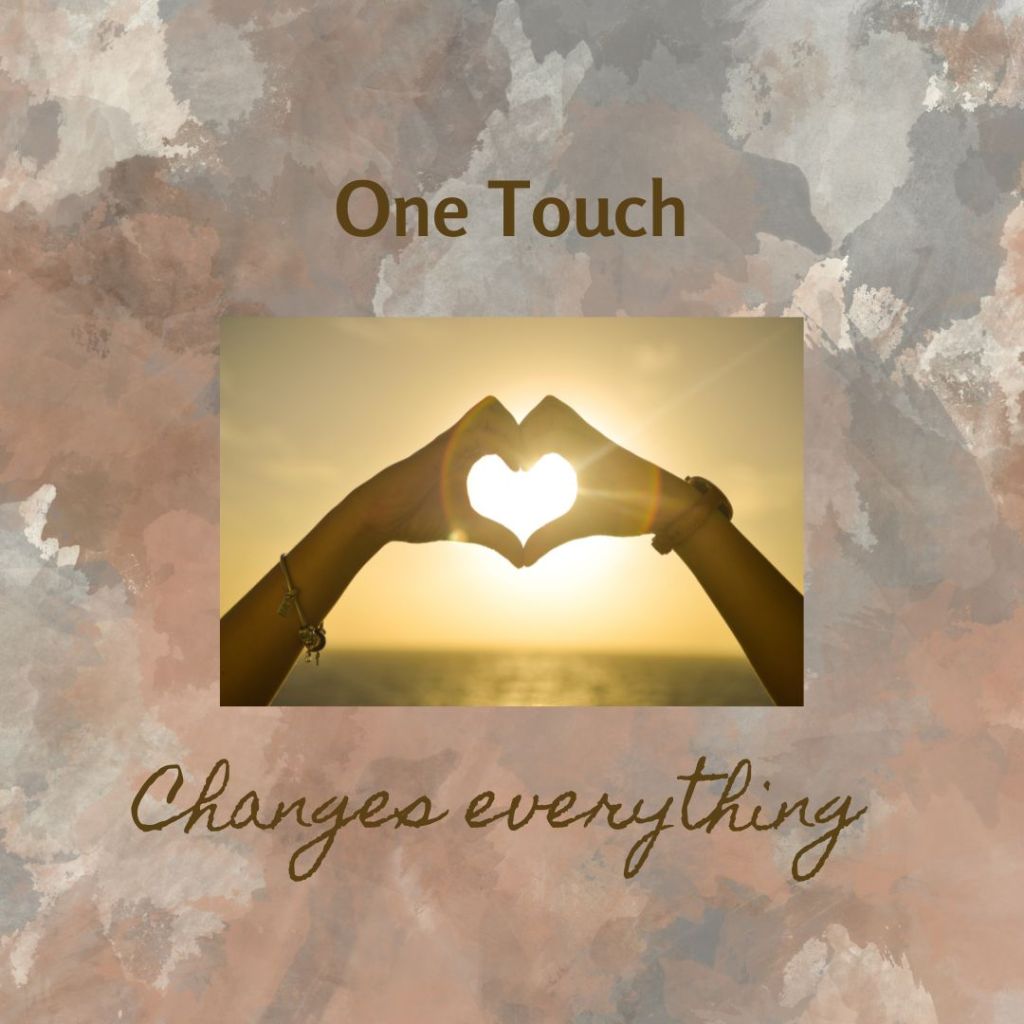
All you have to do is reach out and believe. One touch changes everything. 

Be Bold. Live Out Loud.

-CC

Give It To Me NOW

By Cassi Cox

Prayer and worship tend to be much different experiences for me than they are for those I share community with. It’s taken some time for me to recognize that this difference affects how I engage in faith-based community and the trust that I develop with other members of my community regarding my faith. For me, prayer and worship are God-given gifts that open the communication floodgates. Prayer and worship provide opportunities for me to listen to God. They allow me to speak to God, and tell God all of the things I appreciate, admire, crave, and feel. Prayer and worship are all about relationship for me. 

It’s easy, however, for the church to turn prayer and worship into a marketing technique. After all, people have needs, and often those needs are not just physical. Depression, anxiety, PTSD. Addiction, grief, and generational cycles of trauma. When we are in the midst of the pain and in recovery, we just want to feel better. It hurts. We’re stuck. God is all-powerful, all-knowing, and has our best interests in mind, right? And scripture tells us to ask…so it is often much easier to default to a position of “ask and you will be given,” rather than “seek and you will find,” forgetting that both of these statements are interwoven together in Scripture (Matthew 7: 7-8).  

We literally call the space in which we gather together at church “the sanctuary,” defined as “a place for people to retreat into safety and refuge.” The church should be safe.  It should be a retreat, an oasis, a shelter from the world at large. In well-intentioned efforts to provide that safety and refuge, we often offer instant gratification for those in pain within our walls, without considering their needs, their desires, their lives, and most importantly, God’s ultimate purpose. 

It is this well-intentioned effort that leads congregations to put songs in their worship sets, week after week, with lyrics like,  “I just wanna speak the name of Jesus ‘Til every dark addiction starts to break…I just wanna speak the name of Jesus.Over fear and all anxiety. To every soul held captive by depression. I speak Jesus..”

Lyrics like this draw in the most vulnerable, exploiting their mental health and promising instant gratification and relief from something that affects them every day of their lives. It offers them something that they are not likely to get, which has the capacity to breed resentment at God, the church community, and themselves. After all, while these types of miracles do happen and God CAN do anything, they are considered miracles because they are rare

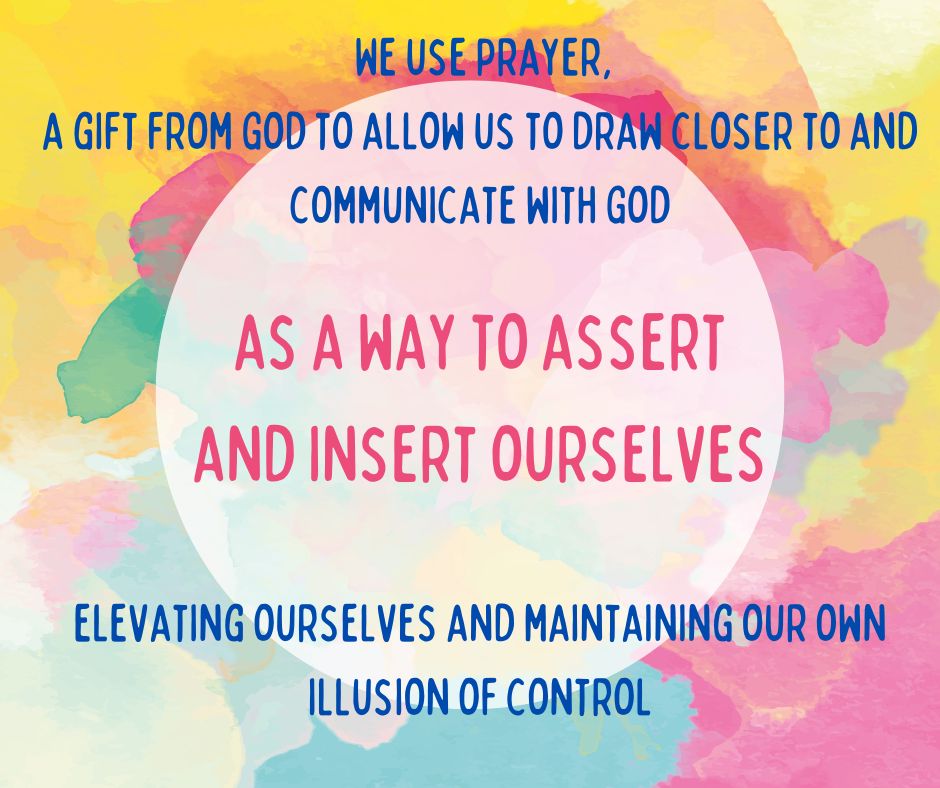
We do this with prayer as well.  It is this well-intentioned effort that fills our prayer request logs with requests for miraculous intervention and healing, but significantly fewer requests for hope, inspiration, long-suffering, wisdom, and love. If we pray enough, if we pray the right way, if we pray collectively, consistently, etc. then God will do what WE want and need from God. We choose the intervention, the means, and the methods, and then we use prayer as a way to feel as if we are still in control. This makes prayer about us, our demands, and our desires and not about God. Often, the demands we make in prayer are not even on our behalf. We enter into prayer declaring to God what God needs to do for and about other people in their lives. We know best, after all, right? We use prayer, a gift from God to allow us to draw closer to and communicate with God, as a way to assert and insert ourselves, elevating ourselves and maintaining our own illusion of control. We demand instant gratification from God on our terms. Heal our sick loved ones, eliminate depression, eradicate anxiety, and replace addiction with a desire and drive to provide for one’s family. We believe that we know best. These solutions that we offer up to the Lord, beating down the doors of Heaven to demand to be made a reality, are the answers we, in all of our worldly knowledge, know will be best for everyone.

This is not to say that God does not perform miracles. God does. I believe in miracles with the entirety of my being. My entire life is evidence of miraculous intervention. God didn’t intervene in my life by erasing my traumatic memories and every neuropathway associated with my trauma responses. That would be absurd anyway because it would mean erasing my entire childhood. He didn’t eradicate the addictions that were central to my childhood trauma, or even erase their evidence. Again, this would involve the erasure of people’s entire existence and impacts on the world. Prayer can be a beautiful gift, allowing us to draw closer to and better understand God, and yet, we have commercialized it. We’ve turned it into something else entirely, centering what we can get and how quickly we can get it. 

We pray for this instant gratification and relief because it’s the easiest and quickest path forward. If all the hard, messy, complicated, traumatic aspects of people’s lives are erased, then we don’t have to be trauma-informed. We don’t have to adapt, change or adjust. We don’t have to reflect upon how our actions and decisions impact the most vulnerable around us…after all, God will just make them un-vulnerable so that we don’t have to do anything! “Lord, please heal my friend from her depression/anxiety/ptsd/trauma/abuse. She’s now jumpy and fearful. She’s slow to trust and I just don’t know what to do.” 

Maybe, dear friend, rather than instant healing of your friend, God is inviting you to stretch. To grow.  Maybe, just maybe, this is an invitation for you to learn more about being like Jesus. And maybe, as you do, your ability to love and serve will become contagious, and maybe, your friend’s recovery will thrive in the context of community. Maybe, just maybe, this is what God means by “bring Heaven to Earth.”

True worship requires no manipulation or demands. It is a celebration of the beautiful relationship we share with the Creator of the universe.  True prayer centers on the relationship that we get to have as we connect with God, and God dwells within us. 

And miracles? Miracles happen all the time, we just choose not to notice them because the miracles don’t make everyone’s lives easier and don’t have a huge performance impact. There are miracles in the mundane moments. 

When I reflect upon my life, it’s a miracle that I learned to love. It’s a miracle that I survived the physical abuses of my childhood. It’s a miracle that I survived the summer I spent trying to die by suicide. My children and my motherhood are miracles. My friendships and marriage are miracles. My career and the way in which I can work in substance use disorder productively is a miracle. What a gift from the Lord, to be able to give other families the intervention I pray God will provide to those I love. I get to be used by God as an answer to other families’ prayers. 

What a miracle. 

May is mental health awareness month. As the collective Christian church, representing and reflecting Jesus, we must commit to the long haul. We have to commit to investing in people’s lives, walking the path of delayed gratification while providing hope, and being fully willing to be used actively by God as part of the miracle. 

Be Bold, Live Out Loud

CC

Joseph and Potipher’s Wife

Flee from Sexual…Assault? 

If you have been in church circles for any length of time like I have, you have heard the sermon about fleeing from sexual immorality. 

The example given for this “flight” is often Joseph, in Genesis 39. In this story, our Pastors tell us, Joseph was tempted and he fled from the temptation to sleep with another man’s wife…literally! He ran away so quickly that he left a garment behind and ended up thrown in prison after being falsely accused by the rejected woman! 

Because of the stereotypes that exist about men and women, it’s really easy to miss what actually happened between Joseph, Potipher and his wife in this account. It’s easy to misread the passage through the lens of our own expectations and biases. 

So let’s go back together and look at what Joseph experienced, from his perspective. 

At approximately the age of 17, Joseph was sold into slavery by his brothers to the Ishmaelites, who then sold him to Potipher. Potipher, who was an officer of Pharaoh and Captain of the Guard (some sources even suspect that he was lead executioner) became Joseph’s master. It is important to note the significant power, and likely age, differential that existed between Potipher and Joseph, as well as between Joseph and Potipher’s wife. 

Joseph worked hard and found favor with both Potipher and God. Throughout Joseph’s story, scripture tells us that “The Lord was with Joseph.” The Lord even blessed Potipher’s house as a direct result of Joseph, and Potipher’s trust in Joseph grew so much that Joseph became the overseer of the entire household. 

At this point scripture zooms out and gives us some additional information about Joseph. The author wants us to understand something. The author wants us to understand that Joseph is handsome and attractive, and much like the victim-blaming language we still see today, explains that as a result of Joseph’s handsome, attractive appearance, Potipher’s wife “cast her eyes on him,” asking him to “lie with her.” (Genesis 39:6-7) 

“ If only Joseph hadn’t been so handsome. So attractive. So young. Maybe none of this would have happened.” Our victim-blame infused culture screams at us, as we read this passage. Was she tempted by him? Maybe he should have recognized that he was “causing his sister to stumble into lust” and done something to be… well…less tempting. 

Except. 

Except. Joseph is not responsible for her thoughts. Joseph is not responsible for her lust, and Joseph existed within her home because Joseph HAD to. His face was his face, just like female bodies are female bodies. His age was his age, just like teenage girls and young adult women are teenage girls and young adult women. It is not the responsibility of the party being preyed upon to address the predatory behavior. She should have mitigated those thoughts herself, and when it became clear that she wasn’t mitigating them, someone with a more egalitarian relationship to hers should have intervened. Joseph did not invite her lust by being attractive and desirable. 

Joseph then told her “no.” He used his “no” clearly, sternly and articulately. He even gave her more than she needed, providing a myriad of reasons why he was saying, “no.” 

She refused to accept his “no.” In fact, “although she spoke to Joseph day after day, he would not consent to lie beside her or be with her.” (Genesis 39:10) She harassed him. Incessantly, in a space he could not escape from. He was a slave, and his master’s wife was soliciting sex from him day after day, refusing to take “no” for an answer. 

And what happened when Joseph held his no in the face of unspeakable pressure and odds? In the face of pervasive and ongoing sexual harassment? 

She took it a step further, actually grabbing his clothing while insisting that he lie with her. “One day, however, when he went into the house to do his work, and while no one else was in the house, she caught hold of his garment, saying, “Lie with me!” Genesis 39:11-12 

Where was everyone, anyway? They had an entire household of servants

At this, Joseph ran, leaving his garment behind as he tries to get away. 

He was DONE. Her predatory behavior had escalated from harassment to assault. Fight. Flight. Freeze. Fawn. He tried to fawn. He really did try. Now she was grabbing him, trying to physically coerce him into sex when he has said “no” over and over again, day after day. He fled. 

He fled from sexual assault. Not from sexual temptation. 

There is no evidence anywhere in the text that Joseph was tempted by Potipher’s wife. He told her “no” from the very beginning, and the only reference to “eyes being cast” were HERS. 

And yet, we have managed to turn this story into one where men must flee from women because women are an inherent sexual temptation. We refuse to recognize that Joseph was sexually victimized in this story by a woman. He was first sexually harassed, and then sexually assaulted by a woman that did not respect his “no.” She had more power, more position and more influence. She also used that power, position and influence. 

After Joseph fled, she called to her household, declaring that Joseph had attempted to lie with her. He only fled, she claimed, when she shouted for help. This is the same story that she gave to Potipher when he arrived home to find nothing but a garment left where his trusted slave once stood. 

Potipher was furious. Enraged is the word the NRSV uses, and he put Joseph into prison. He didn’t just throw him into any prison, though. He threw him into the prison reserved for the Pharaoh’s prisoners- the most elite prisoners. In fact, Joseph does his time alongside the chief cupbearer and chief baker; two people who had spent a significant amount of time with the Pharaoh himself. 

This begs the question: Why would Potipher, a man of immense power and influence, imprison a slave who had attempted to rape his wife among the most elite prisoners? A slave accused of attempted rape (of an official’s wife, no less!) would have been considered worthy of the most severe punishment, including death, especially if Potipher’s role truly was that of an executioner. Could it be that Potipher recognized the Lord’s hand and favor upon Joseph, and he knew and trusted Joseph at his word? Could it be that he knew his wife, and “read the room,” grasping the reality of the situation and the implications of the accusations, which had already spread throughout the household? Could it be that Potipher understood the predicament of the accusation, and knew that imprisoning Joseph would be protective rather than punitive, given the cultural context and climate at the time? After all, prison with Pharoah’s men was a much safer place than a community full of hostile, angry people believing this Israelite slave had attempted to rape one of their own. The shouts of “crucify him,” echo in my mind, a reminder of accusations and community outrage to come.

We can’t truly know the answers to those questions.

We can take the bias-colored glasses off and read this story with an accurate contextual lens, accepting that Joseph was not a man fleeing from sexual temptation, despite decades of this portrayal, but rather a vulnerable, exploited and harassed young man who finally fled from sexual assault at the hands of a woman with significant power and influence. We can remember that women can be predators too.

And maybe, just maybe, the story of a powerful man who angrily imprisoned him protectively rather than punitively.

maybe.

Be Bold. Live Out Loud.

CC

The Idolatry of Man

By Cassi Cox

I didn’t know the reality of God

God didn’t dwell

Not near me

Not amidst those I experienced every day

I didn’t see God

Feel God

Know God

Touch God

I was never loved

In a way that showed me that God is real

Present

Active

In us, among us, between us

I knew Pain; Abuse; Self-serving entitlement and taking

Oppression. Exploitation. Objectification.

I knew the world was ugly and unsafe

I knew that people were dangerous

The world was Sodom

unsafe, abusive

outcry seeming to fall on deaf ears

And then there was you

Gentle and kind

Ever present

Settling the storm with a touch and a word

Empathic and humble

Open arms and soft words

Encouraging me to live fully

There was you

Contradicting everything I’d ever known about people

About the world

You

With your never-failing faith

In God

In me

Holding space for my hope

My pain

My joy

My tears

My successes

My fears

There was you

Persistent

Sustaining

Security and Safety

Foreign to me

Hope and Adulation

Shocking to me

Love that never failed

Changing me

Relationships come and go

This change perseveres

Roots my faith

In the reality that God is here

In us

Among us

Between us

Because I saw God in you.

In a world that is constantly dangerous

Scary

And I must protect

Defend

Guard

You are proof

You validate the gospel

Living, breathing, loving proof

That this is real

This is not a fable

Fairytale

Because you exist

Through it all

in the middle of it all

You exist.

I cling to this truth

While the world crumbles around me

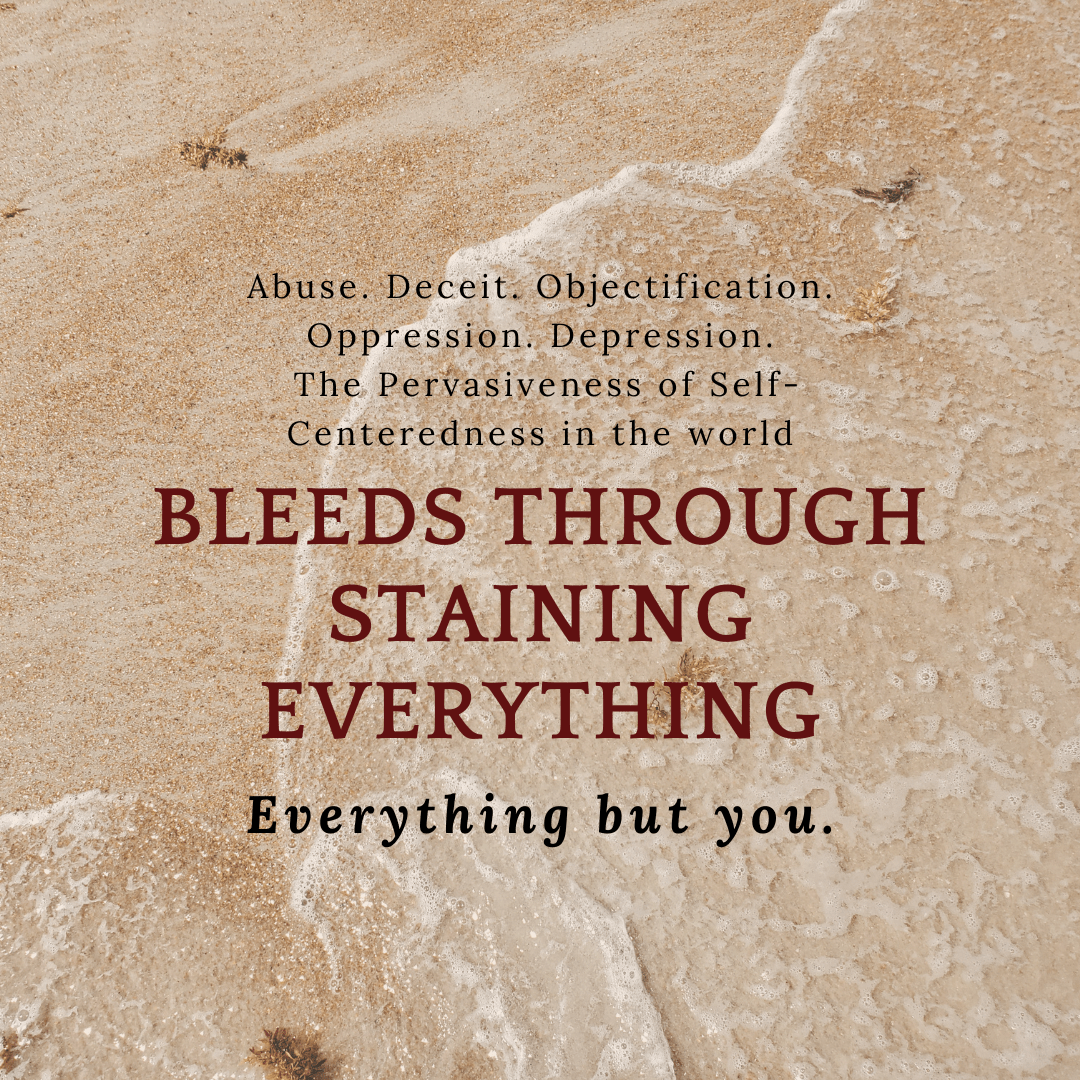
abuse

deceit

objectification

oppression

depression

the pervasiveness of self-centeredness

bleeds through

staining everything

everything but you.

You remain a light

A beacon

Hope

Perseverance

Faith

Love. Above All Else.

Love

Because of this

I face tomorrow

Because of this

I stand with confidence

Strong and ready

To bring the kingdom of God

to the darkness of earth

But what happens

if

when

You aren’t safe?

If

When

Your love fails?

If

When

Your light fades?

Where is God?

I cannot see.

It’s hard to hear.

Everything is muffled.

Broken

Bleak.

Can I hold the beacon for you?

For us?

Do you even want to see?

Do I?

Am I even able, now that my foundation is cracked and shaken?

What happens then?

What happens now?

I stand on sinking sand.

Be Bold, Live out Loud

-CC

It’s Me. Hi. I’m the Problem

By Cassi Cox 

If you have not heard the new Taylor Swift Song, Anti-Hero, you must be living under a rock. You also cannot read this blog any further and actually understand what I’m talking about, so here’s the link to the lyric video on Youtube. 

If you didn’t know that I am a Swifie, you either haven’t been here long or haven’t been paying attention. The woman knows how to turn every emotional experience into a catchy tune, and as someone who doesn’t do well actually expressing feelings but also wants them out and known, I am here for it. 

Most of my life was spent in blissful ignorance that I was, in fact, the problem. 

Well, at least part of the problem. I grew up in a very abusive environment. I was surrounded by violence, drugs and multiple types of abuse. In the midst of that, I learned to survive. It was obvious that I, this vulnerable child, was not responsible for the abuse, the violence or the drugs. I didn’t bring my circumstances upon myself. 

I did, however, learn to exist within it. Survival meant developing certain tools and turning off certain parts of my being. I stopped trusting people. I once believed that it was men that I predominantly stopped trusting as a result of the times I experienced sexual trauma and witnessed domestic violence. Now, after years of processing, I realize that this isn’t the full truth. At the time, expecting to be let down was helpful for me because most of the adults in my circle were unreliable at best and unsafe at worst. There were adults at the time that I believed I could count on. Now, looking back, I am able to see that they were central figures in the system, benefiting from the destructive behaviors of others and not taking the appropriate steps to intervene even when they had the ability to do so. Even those I believed to be safe and trustworthy, weren’t. My primary abuser was a woman in a position of power and authority over me who didn’t do her job to care for and protect those in her charge, instead, using them to serve her own ego and her own desires. 

 As the oldest child, I learned that the other children were even more vulnerable than I was. I loved my brother and sisters with a parental love, and as a result, in that environment, I learned that I could not protect both myself and them. I had to turn off every internal drive to keep myself safe, standing between them and the violence of adults. I also turned off my ability to sense pain and to know when too much was too much. This served me well when I was taking hits, my heart was breaking and grieving as I saw the brokenness of the adult-world around me and tried to build a wall to protect the children in my midst from it, and when choosing not to eat so that my siblings had enough. 

I lied so well. I am sure that people knew things weren’t great, simply because I know how many calls were ultimately made to DCFS and law enforcement. But time and time again, when I speak to members of my community, they are shaken. Nobody knew how bad it really was. That was largely due to my sheltering of the other children combined with my ability to perform well for a crowd. 

I did this because, while I haven’t ever been someone who “cared what others thought,” I have always been someone who highly valued certain relationships. Once you are in my heart, you stay there. I love fiercely, fervently and with a force that most aren’t familiar with or ready for. When I was young, I loved my siblings that way, and I was convinced, heart and soul, that to tell the truth would mean losing them. 

This is a tactic used by abusive parents everywhere. “If you tell, they will separate you. They’ll take you away. They’ll punish you, too. They’ll know all of your secrets, too. I have dirt on you, too. You aren’t perfect, you know. The things you’ve done trying to keep this family together? I can tell them that. Then what will happen? You’ll never be able to protect your siblings from jail! That’s where they’ll put you when they know you fought back/stole for food/ went along with/didn’t tell when…You’re brother/sisters will go to foster care! Do you know what happens there?” 

So I learned to protect with lies. I learned to tell the highlight reel and hide the abuse. These skills served me well in my abusive household, or at least, I my little brain and body believed that they did at the time. 

But then I became an adult. I didn’t follow in the footsteps of those that came before me. I didn’t pursue drugs and violence. 

And yet, I spent the last few years taking some giant steps back. I stepped back from leadership, from ministry and completely re-evaluated my faith, steeping myself in Jesus rather than people. 

Because in my mastery of survival, I learned skills that helped me hurt people who could be trusted, who did invest in me and who were safe. When someone demonstrated themself to be safe, trustworthy and tender with me, rather than opening up and letting them in, my defense mechanisms went on high alert. 

It’s me. Hi. I’m the problem. 

When someone stepped in to help lighten the heavy burden I have always shouldered all by myself, I found myself observing them, wondering…” When will they cash in the favor?” 

It’s me. Hi. I’m the problem. 

When someone was truly available for my vulnerability, I ran in fear. After all, historically, vulnerability meant danger. So instead of imbedding myself with those who treasured all that I am and valued my whole self, I ended up surrounded by people who treasured all that I was capable of doing and giving, using my skills to further their own agendas and egos. 

It’s me. Hi. I’m the problem. 

And still, even today, I struggle with those I love the most. I am constantly tempted to compromise my safety, my values and my limits in order to ensure that those I love the most are safe, protected and that I can be there to see and ensure that it happens. I stay. I fight. I persevere, I take the blows, I overwork and overextend myself. I see what they don’t see, and do my best to stand guard while it rips my heart and soul to shreds. I sit across from a man who shattered my whole heart, realizing it’s me. Hi. 

I’m the problem. 

I’ve done the work. I keep doing the work. I certainly stopped lying to protect those causing harm, because now I understand the importance of cycle breaking. I am determined to break the cycle. 

So. Many. Cycles. 

Years ago, I wasn’t even capable of feeling my own pain. I was only able to hurt for someone else. But there is more work to be done. 

Yeah. Abuse was the problem. Trauma was the  problem.

But I am also the problem. 

All of these things can be true. 

They are all true. 

At teatime, everybody agrees.

Be Bold. Live Out Loud.

CC

Sodom and Gomorrah

By Cassi Cox

Have you ever gotten up during service and left, or even just taken a break mid-message? 

I never used to. I felt guilty, walking out during the message. I thought about how it impacted the pastor, seeing someone leave and not come right back. 

Over the course of the last year, I have been challenged to consider protecting myself rather than only protecting others. With that in mind, I stepped out of service today. 

I stepped out with my own peace and mental health in mind, so that I wouldn’t have to control any physical or bodily reaction to what was being said. 

I stepped out in solidarity with other survivors of sexual trauma and other queer people within the faith community. The story of Sodom and Gomorrah has been used in harmful ways for far too long. 

Today, my pastor was discussing the book of Jude, which references the story of Sodom and Gomorrah. Jude 1:7-8 says, “Likewise, Sodom and Gomorrah and the surrounding cities, which, in the same manner as they, indulged in sexual immorality and pursued unnatural lust, serve as an example by undergoing a punishment of eternal fire. Yet in the same way these dreamers also defile the flesh, reject authority, and slander the glorious ones.” Other translations use the word “perversion,” and refer to “abuse” of celestial beings. 

In Genesis 19, the story of Sodom unfolds as two angels arrive after visiting with Abraham and Sarah. God sent them there, Genesis 18 tells us, to do some investigative work, as there had been “outcry” against the cities. Lot, being the hospitable man that he was, invites them to stay in his home. This was customary at the time, and inhospitable treatment of travelers was a huge deal in the culture at the time. The angels, though, decline, and announce that they are staying in the town square. Horrified, Lot insists and they end up in his home for the night where he is a gracious host, feeding them well before bed. 

“the men of Sodom, both young and old, all the people to the last man, surrounded the house; and they called to Lot, “Where are the men who came to you tonight? Bring them out to us so that we may know them.”

Genesis 19:4-7

In scripture, “knowing someone” is code. Euphemisms were used throughout scripture, and this one was code for sexual penetration. The men of the city surround Lot’s home, announcing their intentions. They intend to sexually penetrate the two men they had seen come to Lot’s house-two vulnerable travelers, in need of hospitality and protection. 

I once believed that this went without being said, but since the majority of Christian settings use this passage to target non-heterosexual sex expression, I am going to make sure to say it. These two traveling angels were not consenting to any form of sexual expression. This community of men were demanding it. Sexual contact without consent is sexual assault. Rape. They were trying to rape the angels. This is a story about attempted gang rape. Genesis 19 continues,

“Lot went out of the door to the men, shut the door after him, and said, ‘I beg you, my brothers, do not act so wickedly. Look, I have two daughters who have not known a man, let me bring them out to you, and do to them as you please; only do nothing to these men, for they have come under the shelter of my roof.’ But they replied, ‘Stand back!’ And they said, ‘This fellow came here as an alien, and he would play the judge! Now we will deal worse with you than with them.’ Then they pressed hard against the man Lot, and came near the door to break it down. But the men inside reached out their hands and brought Lot into the house with them, and shut the door. And they struck with blindness the men who were at the door of the house, both small and great, so that they were unable to find the door.”

Genesis 19:6-11

This is not a story about queer sex. This is a story about attempted rape. There are also multiple points in the story where “outcry” is referenced. Whose outcry? After reading the story, is it more reasonable to believe that “outcry” exists because of men who were using sex in a way that violated other people, or because people were engaging in queer sexual expression? 

This is not the only time that we are given the account of a group of men demanding access in order to commit a horrific rape in scripture, either. In Judges 19 we are given the story of a Levite who is traveling with his servant and his concubine. They had a fight and she left him. He went to bring her home, and the assault happens as they travel home after being reunited. The story is strangely similar. From the men surrounding the house, pounding on the door and demanding access to rape the man who was given hospitality, to the host attempting to talk them down, it’s like a repeat of Lot’s account. 

Like Lot, this host offers his own daughter as well as his guest’s concubine. That is not good enough, though. They want to rape the man. 

It’s important to recognize the different impact this sexual victimization would have on a man vs. a woman in this culture. Women had no status and were treated as non-people. Women were property, and they existed for the use of men. The rape of a man, then, even moreso than that of a woman, was about removing his status. It was about demoting his position and making him “like a woman;” one with no power, no position, no influence. To be penetrated in this culture was to reduce a man to the lowly status of a woman. In an honor and shame culture, rape was about power and shame. 

This was not about homosexual desire. “He would play the judge,” they said, as they demanded access.These men wanted to show this traveler who had the power. The story continues,

“But the men would not listen to him. So the man seized his concubine, and put her out to them. They wantonly raped her and abused her all through the night until the morning. And as the dawn began to break, they let her go. As morning appeared, the woman came and fell down at the door of the man’s house where her master was, until it was light. In the morning her master got up, opened the doors of the house, and when he went out to go on his way, there was his concubine lying at the door of the house with her hands on the threshold. “Get up,” he said to her, “we are going.” But there was no answer. Then he put her on the donkey and the man set out for his home. When he had entered his house, he took a knife, and grasping his concubine, he cut her into twelves pieces, limb by limb, and sent her throughout all the territory of Israel. Then he commanded the men whom he sent, saying, “Thus shall you say to all the Israelites, ‘Has such a thing ever happened since the day that the Israelites came up from the land of Egypt until this day? Consider it, take counsel, and speak out.”

Judges 19:25-30

 This sounds a whole lot like “outcry” to me. 

There is an old saying in church circles about how if the Bible references it multiple times, it must be important, and here we have two entire stories about gang-rape. 

Yet consistently from the pulpit, this passage is used to condemn our brothers and sisters acting out consensual, committed, loving sexual expressions of intimacy rather than condemning the violations of consent and the use of sex to exert power and control over others.  Instead of expressing safety and empathy for those recovering in the aftermath of sexual trauma, our churches are focused on what traditions benefiting those in power have taught them. We overlook the clear abuse that God is condemning in scripture. 

And our brothers and sisters who are engaging in loving, consensual, non-straight sexual expression are treated as worthy of God’s wrath, while those using sex in a way that violates others keep their positions of power and prestige. We sweep their offenses under the rug, hope that they can say “Sorry” (maybe even publicly) and thank them for their (feigned) humility while expecting the most of the abused party. Accept the “apology” and the (public) change or be ostracized. After all, “hurt people hurt people” and “we’re all broken people in need of God’s grace.” 

That’s why we shamelessly condemn queer people so hard they are unaliving themselves (some of whom are the best humans I have ever met, and more like Jesus than a lot of church folks I interact with) while simultaneously giving our predators free passes, right? 

I’m tired, church. 

I am tired of seeing “sexual immorality” defined as “doing what makes you happy/feel good” and NOT by the misuse of power, coercion and lack of consent. I’m tired of victim-blaming, survivors hiding their pain and being forced into relationship with their abusers under the guise of “community” while these stories of sexual assault given to us IN SCRIPTURE are weaponized against some of our most tender-hearted brothers and sisters. Some of our most marginalized, most abused, most isolated and most abandoned by our own faith communities bear the burden of the label “sexual sinners’ while our rapists and harrassers stand at pupits and gain repeated access in the name of grace. 

So yeah, today I took a break during service even though my pastor didn’t do anything different from countless other pastors across the country. In fact, he even recognized that there was a “lack of hospitality” in the treatment of the men of Sodom toward the angels. He didn’t call attempted gang rape what it was, and he still identified the sin of sexual immorality as “doing what you want sexually” rather than “using sex to harm other people.” 

And I have had enough. I am so close to my breaking point that I can hear the tension in the air. 

We have to do better, church. 

We have to put aside our own expectations that people will be just like us, adopt eyes that see, ears that hear. 

Lives depend upon it. Hearts that crave a relationship with God but do not feel wanted in the community we have created depend upon it. 

The safety of our community depends upon it. 

“Consider it, take counsel and speak out.” Judges 19:30 

Be Bold. Live Out Loud. 

Silent No More

If scrolling social media when I have 47 other things I should be doing is my toxic trait, you’re all coming down with me. 

Don’t even make that face; you know it’s true. 

Scrolling when I should have been cleaning is exactly what I was doing when I stumbled upon a post from a casual friend. I wasn’t expecting my childhood trauma and the social ramifications of it to be unearthed due to social media dissociation, but there I was, pantsless, rocking a messy bun, totally shaken. 

“I was just thinking this morning about multiple instances during my early teenage years when my friend’s mom would say awful things about me. I was probably 13-16 years old and they wouldn’t let their daughters stay the night with me or would tell them things that weren’t true about me…It’s been over 15 years and I still remember every instance of this happening…” 

-Anonymous FB Post

My breath caught in my throat. She’d only posted it a few hours earlier, but the #metoo comments were rolling in.

 “I was just a kid born into a bad situation…” 

“I was screaming for help. Those throwing those words had a good environment…support…all the things I wish I’d had.” 

“…because of the way I dressed.” 

“…pregnant…” 

“…we were not only judged by the adults but by their children based on the assumptions of our last names, the way we dressed, who we hung out with…” 

“Turns out I didn’t become my family and somehow became a good person.” 

Slowly, I added my own to the growing list. 

“Yup. It took years to deal with the shit I carried because my boyfriend’s dad told him to break up with me because “shit rolls downhill” and no matter how great I seemed to be doing at the time, I would inevitably end up like my mother.”

There is so much that I said, and so much that I didn’t say in that one statement. 

I imagine that this is also true of every other woman who added her #metoo statement to the post, and every other individual who could. 

Because the truth is, we carry so much baggage in secret.  

Even when the obvious aspects of our pain are brought forcibly, into the light. An arrest. Child Services involvement. Expulsion. Divorce. Even then, we hide push the impact of the trauma into the darkness, behind phrases like: 

“I’m coping” 

“I’m committed to being a cycle-breaker.” 

“I will never be like that.” 

“I am dealing with it.” 

What I didn’t say in my “You’re not alone” reply? 

It didn’t take me years. It took more than a decade. 

That one statement, in the context of a relationship that was really important to me, had a significant impact on my life. I hate admitting that, because frankly, I don’t like recognizing that this jerk had that much power over me, but here we are. 

That one statement was the culmination of my efforts to overcome the stereotype of being “her daughter” failing miserably. No matter what I did and no matter who I became, I would always carry that with me. My character would never matter. My integrity would never matter. My success would never matter. Hell, me, as a person, I would never matter because at the end of the day I would always be marred by my lineage. I would never just be “me.” I would always have an asterisk next to my name. 

A child of addiction. A child of criminality. A child of deception. A child of…. 

Every negative label in the book. And every single one, forever applied to me, not for anything I had ever done but simply because of whose womb I grew within. 

Me, in nearly every relationship.

It affected the way I moved through relationships. It planted a niggling question mark in the back of my mind.  I was afraid to invest in romantic relationships and even close friendships. I was waiting for those around me to change their minds; to decide that I was too labeled for them to attach themselves to. 

For years, I have talked openly about what happened to me. HERE are the abuses that I experienced at the hands of my abusers. Rarely have I spoken about the social impact of being abused and neglected. It’s even harder to speak about how that impact on me impacted others. Others that I love. Others that love(d) me.

It’s unsettling to know that adults knew that my circumstances were bad and that their response was to shame, isolate and condemn me. Rather than intervention, support and advocacy, so many adults further isolated a vulnerable child (and later teen). 

I was a child. These women responding to the post? They were children. 

All it takes is one safe adult. We’ve heard that time and time again, and I have written at length about the people in my life that gave me safety and security when I had never really experienced these things before. One safe person can make all of the difference in the world. 

BUT

BUT, friends, hear my heart when I say this, BUT

So can a sea of catty, judgmental assholes. 

It is incredibly difficult for one safe person to stand guard for a vulnerable child against a hoard of gossip mongers and judgmental jerks. It’s hard to keep teens alive and free from self-destructive and dangerous behaviors when there is an ensemble of voices telling them they will inevitably continue to be a drain on society (because per these people, they already are-cue the complaints about food stamps and income based housing.) 

When all a teen hears is a melody of all the things they aren’t and will never be, it’s hard for one voice to overpower all of it to remind them of who they are. 

Their strengths. 

Their gifts. 

Their passions.

Their power.

Their autonomy.

Their creation story; created in the image of the creator of the universe. 

Their value.

Their dignity. 

Their contributions. 

It’s hard to plant hope for the future when so much of the community around them is rooted in fear of replicating the past. 

I spent so much of my life afraid. 

Afraid to Love. Afraid to live. Afraid to really try.

I spent so much of my life in disbelief. 

Of my worth. Of my autonomy. Of what God created me to do.

Can we please commit together to do better for the next generations? 

Our next generations, sure. 

But also the next generations whose homes are broken, drug-riddled and abusive. Who dropped out of school, were never taught to wash their hair correctly and speak too loudly? 

Stand in the gap. Replace the voice in their minds with one of encouragement and love rather than shame and condemnation.

Can we plant hope instead of fear? 

Can we instill faith instead of disbelief? 

Can we, together, choose to rise above rather than tear down? 

Please? 

Your family history… or theirs. The child doesn’t have to be yours to be worth protecting.

Be Bold. Live Out Loud. 

CC